
How to Clean Your Car Interior: A 20-Minute Routine That Works
You don’t need a detailer’s budget to get a detailer’s result — you need twenty minutes and the right two or three brushes. This is the exact routine we recommend for a normal car: no steam cleaner, no extractor, nothing that requires a garage. Do it once properly and keeping it clean afterwards takes five minutes a week.
Work top to bottom, dry to wet, and never skip the vents — they’re the reason your interior looks dusty again three days later.
What You Actually Need
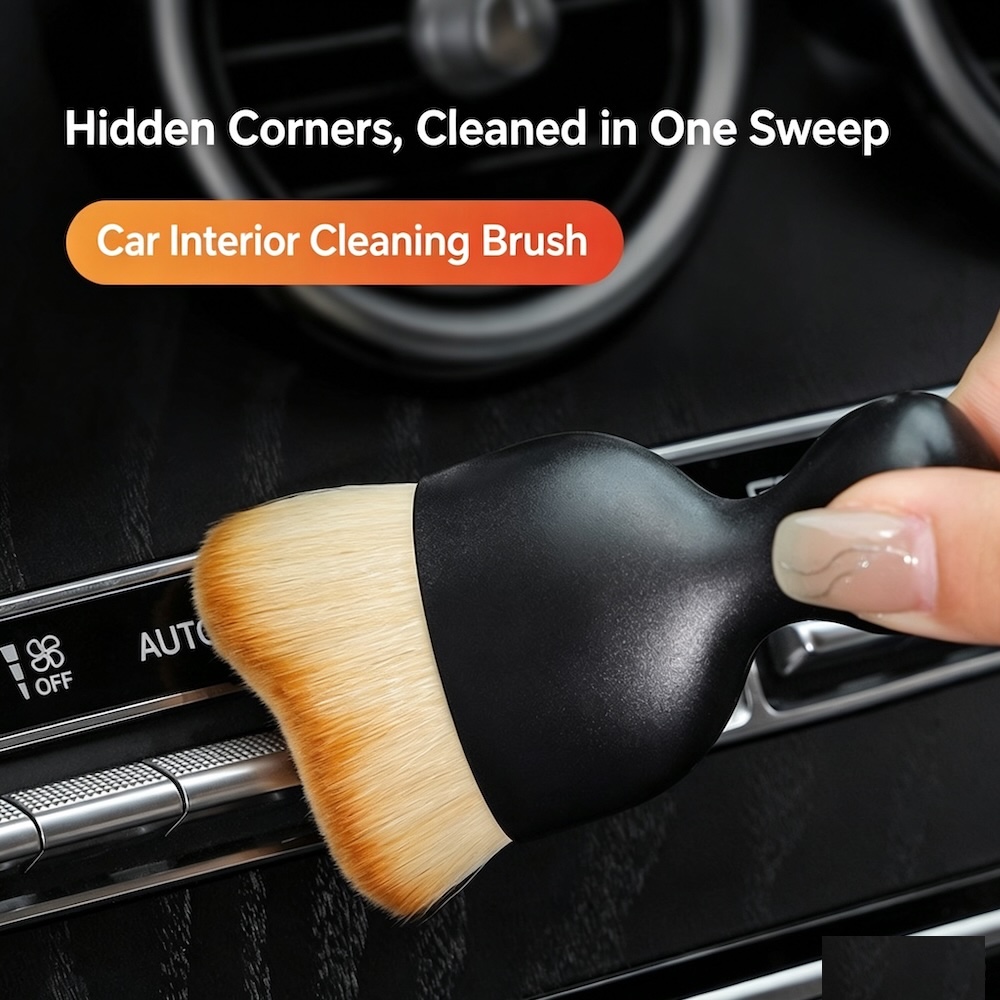
- A soft interior detailing brush (or two — one for the car, one for the house)
- A slim windshield brush for the inside of the glass
- Two microfiber cloths: one damp, one dry
- A trash bag, and a vacuum if you have one
That’s it. Everything below uses these tools:
- Interior Soft Cleaning Brushes (2-pack) — $8.99
- Windshield Defog & Cleaning Brush — $9.99
- Complete Car Detailing Kit (all three brushes + door organizer) — $42.99
The 20-Minute Routine
Minutes 0–3: Empty Everything Out
Floor mats out, glovebox emptied, door pockets cleared, trunk cleared. You cannot clean around clutter, and half the “dirty car” feeling is actually just loose objects. Shake the mats out away from the car and set them aside.
Minutes 3–6: Attack the Vents and Crevices First
This is the step almost everyone skips, and it’s the one that matters most. Air vents, the gap between buttons, the seam where the dash meets the windshield, seat rails, and the cup holder bottoms all hold fine dust — and your heater or AC blows it straight onto your glass and dashboard.
Use the soft brush dry, working in short strokes. A stiff brush will polish the plastic and scratch a touchscreen; the 2-pack of soft brushes exists precisely because vent slats need bristles thin enough to fit between them without bending.
Order matters: dust first, then vacuum or wipe. If you vacuum first, brushing afterwards just redistributes the dust you already removed.
Minutes 6–10: Glass, Inside and Out
Do the inside first, because cleaning the outside drags dirt onto the inside of your fingers’ reach. The film on interior glass — from plastics, dust and breath — is what causes winter fogging and that greasy look in low sun.
A slim angled windshield brush reaches the bottom corners and the strip behind the dashboard where a cloth can’t. Wipe with the damp cloth, then buff with the dry one, top to bottom, and use vertical strokes on the inside and horizontal on the outside so streaks are easy to spot.
Never use a paper towel on interior glass. It sheds fibers that stick to the film and make the next fogging worse.
Minutes 10–15: Dash, Trim, Seats
Wipe the dash and door trim with the damp microfiber, then dry immediately — leaving plastic wet attracts dust. For fabric seats, brush the surface with the soft brush and vacuum if available; brushing lifts the grit that wears fibers out.
Skip the shiny silicone sprays. A dusty interior plus glossy dressing equals a greasy dashboard that shows every fingerprint.
Minutes 15–18: Mats and Floor
Vacuum the carpet, then put the mats back. If you don’t have rubber mats, this is the single best upgrade for a car that sees rain or snow — salt melts into carpet and keeps corroding even after the road dries.
Minutes 18–20: Doors Open, Air Through
Open all doors and the trunk for two minutes. Ventilation removes the moisture you just introduced and stops the “damp car” smell that shows up a day later.
Winter Add-On: The Salt Problem
From November to March, road salt gets tracked in and grinds into fabric, so add two steps to the routine:
- Rinse the floor area every 10–14 days — salt stays active while it’s dry
- Keep a snow brush and ice scraper in the trunk so snow goes outside the car, not on your carpets
For the full cold-weather side of car care, see our winter car care checklist — it covers glass, seals, washer fluid and tire pressure.
How to Keep It Clean for Five Minutes a Week
The clean car you get in twenty minutes lasts if you break the two habits that ruin it:
- Never eat in the car without a bag — crumbs become the grit that dulls surfaces
- Keep a brush and a cloth in the door pocket — a thirty-second weekly pass beats a two-hour deep clean every season
FAQ: Cleaning Car Interiors
How often should I clean my car interior?
A quick brush-and-wipe weekly, and a full twenty-minute routine every four to six weeks. In winter, add a floor rinse every two weeks because of road salt.
Can I use dish soap on my dashboard?
Better not. Dish soap strips the protective finish and leaves plastic looking chalky. A damp microfiber with a small amount of interior cleaner is enough for a normally used car.
What’s the best way to clean air vents?
Dry and gently, with a soft brush sized to the slats. Don’t spray cleaner into vents — it drips into the blower and produces a musty smell for months.
How do I stop my windows fogging up after cleaning?
Clean the inside glass properly and don’t leave moisture in the car. Fog is a film plus humidity; remove either one and it stops. A dedicated defog brush keeps the corners reachable so the film never builds back up.
Do It Once, Then It’s Easy
Twenty minutes, three tools, done. If you’d rather buy the whole set in one order, the Complete Car Detailing Kit covers every step above for $42.99 instead of $48.97.
Shop Car Cleaning Essentials →
Related reading: Winter Car Care Checklist: 9 Tools to Protect Your Car · How to Protect Your Car From Road Salt This Winter · Small Apartment Storage Ideas: 12 Space-Saving Hacks · Practical Gift Ideas Under $50 for New Homeowners · Space-Saving Shoe Rack Ideas: 8 Ways to Store Shoes in a Small Apartment · Car Snow Brush: How to Choose One and Clear Ice Fast
Last updated: October 2026