
How to Protect Your Car From Road Salt This Winter
Snow doesn’t rust cars. Road salt does — and it keeps working long after the road looks dry. Every winter, salt gets sprayed across your undercarriage, packed into your mats and flung along your door panels. Left alone, it eats through paint, brake lines and floor pans. The fix isn’t expensive: it’s a routine, and it takes about ten minutes a week.
Here’s how to protect the parts that actually rust, in the order that matters.
Why Salt Is Worse Than Snow
Road salt (sodium chloride and the newer magnesium chloride blends) lowers the freezing point of water — that’s the point of it. The side effect is that it also accelerates the electrochemical reaction that turns steel into rust. Two details make it worse than most people assume:
- Dry salt is still active. It only needs a little humidity to start corroding, which is why cars rust in parking garages, not just in slush.
- It hides in places you don’t wash — wheel arches, subframe, behind the fuel filler, inside door bottoms, and under the floor mats.
The good news: salt needs contact time. Rinse it off before it sits, and the damage mostly doesn’t happen.
1. The Undercarriage Comes First
This is the part that decides whether your car survives a decade of winters. Salt sits on the underside and stays wet longer than anywhere else.
- Rinse the underside after every major salting event — not necessarily a full wash, just a hard rinse from the side, angled inward
- Do it when temperatures are above freezing where possible; washing below 32°F risks freezing doors and locks shut
- Never scrape underbody rust with a brush — you’ll open bare metal. Rinse and let it dry
An automatic wash with an undercarriage option is the fastest version of this. Twice a month from November through March is a realistic target; more often if your roads get heavily treated.
2. Paint, Panels and Wheel Arches
Road spray deposits a fine salt film along the lower third of the car — doors, sills, bumpers and arches. That film is what you see as white streaks in spring, and it’s already been working for months by then.
- Wash every 10–14 days in winter, and always include the lower panels and wheel arches
- Keep a layer of protection on the paint — a coat of wax or a spray sealant in late fall makes salt rinse off far more easily and stops it bonding
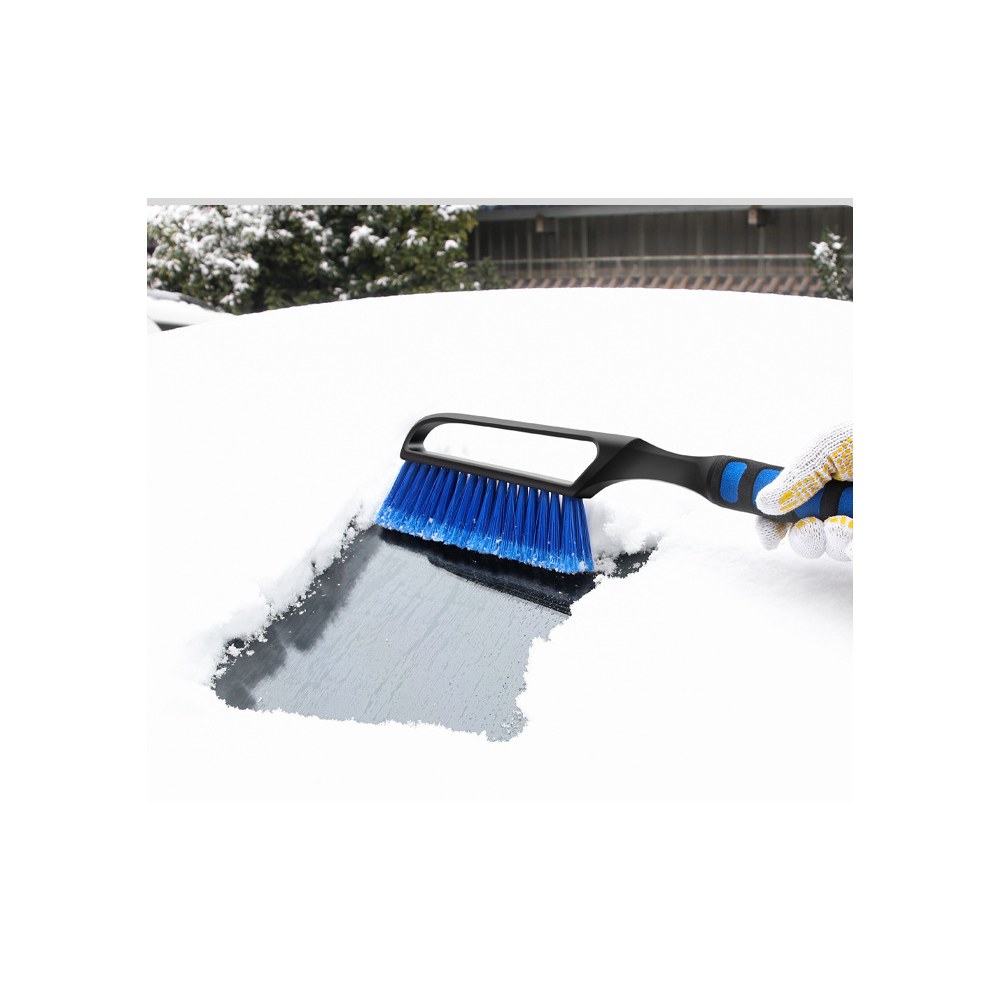
- Don’t chip ice off the paint. Use a proper snow brush and ice scraper on glass only — for body panels, let the defroster and the sun do it
A detachable brush like ours exists for exactly this reason: the soft scraper head clears glass, the brush head moves snow, and you’re not improvising with a metal-edged tool that leaves permanent scratches.
3. Glass, Wipers and the Inside of the Windshield
Winter visibility problems come from two directions: ice outside, film inside. The film — plasticizers, dust and moisture baked onto interior glass — is what makes your windshield fog the moment you breathe.
- Clear snow with the brush, ice with the soft blade, never with hot water (thermal shock cracks laminated glass)
- Clean the inside of the glass properly at the start of winter with a slim windshield defog brush — it reaches the corners a cloth can’t
- Top up with winter-rated washer fluid; summer fluid freezes and can crack the reservoir
- Don’t run wipers on a frosted windshield — the blade tears and the glass scratches
4. Mats and Carpets: Where Salt Sits Longest
Your floor area collects salt slurry all winter and holds it against fabric for months. This is the single most overlooked corrosion source inside a car — and the cheapest to fix.
- Switch to rubber mats for the season. Carpet mats absorb the melt and keep it against the floor pan
- Rinse mats every two weeks with plain water; dried salt reactivates with humidity
- Brush and vacuum the carpet underneath — salt migrates past the mat edges
- Keep an interior brush in the car to lift dried salt from fabric before it grinds in
If you’d rather buy the whole cleaning set in one order, the Complete Car Detailing Kit bundles the interior brushes, the windshield brush and a door organizer for $42.99 instead of $48.97.
5. Door Seals, Locks and Trunk Edges
Frozen doors are a winter morning tradition, and forcing them damages the rubber seal — which then lets water into the door cavity, where it rusts quietly for years.
- Wipe door seals with a silicone spray or a light coat of rubber conditioner in late fall
- Never pour hot water on a frozen door; the seal deforms and the water refreezes
- Keep the trunk lip and drain channels clear of ice and grit
6. Stop Salt at the Door of Your Home
The car isn’t the only thing salt destroys. Tracked in on boots, it ruins flooring and grout through the winter and keeps drawing moisture all year.
- Put a stacked shoe rack ($24.99) at the entry so wet boots drain instead of standing in a puddle
- Hang a pocket organizer ($19.99) on the door for gloves, scrapers and dog leads, so grit stops at the threshold
- Both together make up the Home Organization Starter Kit at $38.99
Winter Maintenance at a Glance
- Weekly: rinse mats, brush carpet, clear snow before it melts into the interior
- Every 2 weeks: wash including lower panels and wheel arches, rinse mat undersides
- Monthly: undercarriage rinse, check tire pressure (it drops about 1 PSI per 10°F)
- Seasonally: wax or seal the paint, silicone on door seals, winter washer fluid, rubber mats in
If you want the cold-weather side of car prep in one place, our winter car care checklist covers the tools and the ten-minute jobs, and the interior cleaning routine handles the inside of the cabin.
FAQ: Road Salt Damage
Does rain wash road salt off my car?
Partly, but not from the places that matter. Rain rinses open surfaces and leaves salt packed in wheel arches, subframes and floor mats. A deliberate rinse still does what rain can’t.
How often should I wash my car in winter to prevent rust?
Every 10–14 days, and rinse the undercarriage at least twice a month. Frequency matters more than thoroughness — salt damage is a contact-time problem.
What’s the best way to get salt stains out of car mats?
Rinse with plain water, brush the fibers, then dry fully away from the car. Don’t use hot water on rubber mats and never leave them damp — damp salt is more corrosive than dry salt.
Is the white residue on my paint permanent?
Usually no. It’s dried salt and mineral film; a normal wash with the lower panels included removes it. What is permanent is what it does if it sits there for a whole season.
Does a car wash harm my paint in winter?
No — more frequent washing is the protective option. Just skip washes below freezing unless the doors and seals are dry afterwards.
The Ten-Minute Habit That Saves Your Car
None of this is heroics. Rinse the underside, keep the mats clean, keep the salt outside the cabin, and protect the paint before the first storm. Do that and spring arrives without surprises.
Start with the tools that make it easy — everything in this guide is in Car Accessories, or grab the 6-item Home & Car Reset Kit for $89.99 instead of $111.95.
Shop Winter Protection Essentials →
Related reading: Winter Car Care Checklist: 9 Tools to Protect Your Car · How to Clean Your Car Interior: A 20-Minute Routine · Small Apartment Storage Ideas: 12 Space-Saving Hacks · Practical Gift Ideas Under $50 for New Homeowners · Space-Saving Shoe Rack Ideas: 8 Ways to Store Shoes in a Small Apartment · Car Snow Brush: How to Choose One and Clear Ice Fast
Last updated: October 2026